Thales > Métiers > Project manager

Project manager chez Thales

Choisis ta question :

Parcours

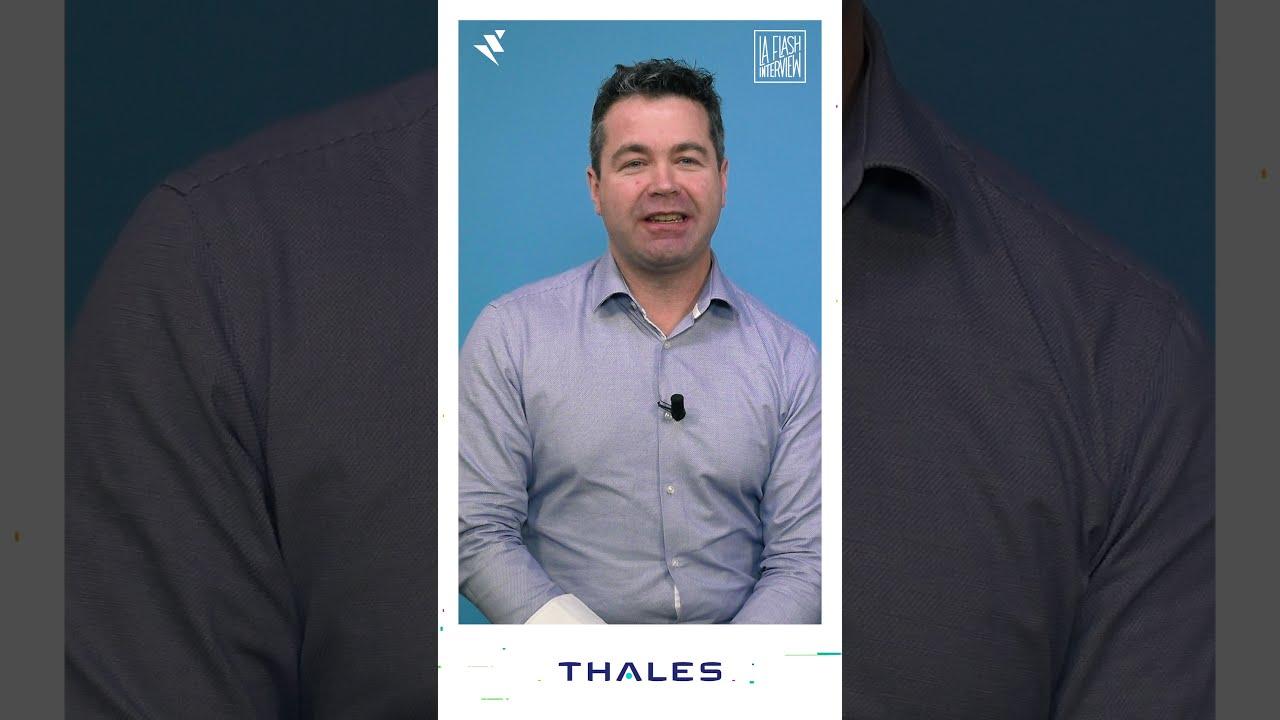
My name is Graham. I’m a project manager within Thales Naval Division. I’ve been working for Thales for six years, three years here in France, and three years in the UK. I have a doctorate in Engineering. Before joining Thales, I worked for various companies, both in the commercial and the defence sector, and also in a research environment.

Missions d'un chef de projet

So I worked within the Thales Naval Division, we’re primarily responsible for delivering systems throughout the world. Various systems, both radar, combat systems, sonars, torpedoes and various equipments that go on board naval ships. Within the Thales Naval Division, I’m part of the Bid and Program management job family. Obviously, there are two aspects to that: both the bid side, and later on, the project management. What is a bid? A bid is responding to a customer’s needs, requirements, looking at his needs and requirements and seeing if we have a product already suitable for that, or if not, if we can modify an existing product, or create a new product, and obviously calculate the price and the technical specifications and the performance criteria that go along with such a system. Of course, assuming we win the bid, then we move into the project management side, which is to follow that development and design process. We have a set of internal procedures that we follow, a standard development lifecycle, right from the beginning, right through to the delivery of the equipment. Obviously, within that, we have to monitor cost, schedule, technical requirements, risk, all these things which we do on a day-to-day basis as part of the program. My particular job is I’m a project manager within a large sonar program. We have to deliver sonars for 27 frigates, for a total of around €340 million, so quite a sizeable programme. Of course, what is a sonar ? A sonar is an equipment that goes on board a naval frigate in order to help the personnel on board detect any threats to that frigate. So we listen for noise in the water that may be coming from a torpedo or a submarine, and sometimes, also, we actively transmit, which is make a specific noise in the water and we detect the reflections and perform signal and data processing to determine if that’s just a rock, or if it’s a real threat to the ship.

Au quotidien

At the beginning of this program, on a day-to-day basis, I was involved in the bid, which was obviously very important for gaining the work, so that we had some work for the whole team. That involves looking at the customer’s requirements and negotiating internally to: one, see if we have a product that exists; two, if we don’t have a product, can we modify one; three, if we don’t even have a modifiable product, can we develop something, and if so, what’s that going to cost, what’s that going to cause us, in terms of risk, how long will it take to build and design such a system, and various factors like that. Actually, because of the size of this programme, we had to go through a large industrialisation program, which was looking at how we could reduce the recurring cost, because we’re building a large number of equipments. Of course, when we move into the program part of the project, then the day-to-day work is very different: we need to monitor schedule and cost, but equally risk. Risk is an important factor in a program, that needs to be monitored, because obviously that impacts technical requirements, cost and schedule. And so, on a day-to-day basis, we’re speaking with the customer, and also with the internal teams. Meetings with the customer can be either at our own offices, or in Paris or Rome, for example, for me. So I get quite a bit of international travel, which I find personally interesting. For example, during a recent meeting in Rome, the customer was expressing his need for a performance prediction tool, because he was expecting to have one delivered to him by his customer, and it wasn’t going to be available at the right time. Of course, we have a product in that area, so I was able to say we could look at the matter, and come back to him with a proposal. So I then came back to our local offices, spoke with the project director to see what his strategy was, to see if it was something he was interested in bidding, and we then began to formulate a proposition for that. I spoke to the technical team to ensure the requirements could be met, the legal and the contractual functions as well. This is very important to ensure that everything is very clear with respect to the contract. And we produced a cost and technical proposal, which was accepted by the customer. So the aim of a performance prediction tool is to help the sonar operator to actually know at what range he may be able to see a threat in the water.


Avantages

So what interests me about my job? Well, one of the prime reasons is the varied work. I can be…as I already said: I can be dealing with technical matters, cost, finance, pure finance, legal, contractual, on a day-to-day basis. It’s very varied. I find that very interesting, for myself. I’m not stuck in a rut, doing a particular single task. The other thing that interests me, which is equally applicable to me, is international mobility. I’m here, located in France now, for three years, and the fact that I’m here and have the opportunity to travel internationally to Rome, and to see other customers, is something I find very interesting. Obviously, one drawback of the job is that sometimes you have to work late, and sometimes you have to work weekends, to be able to get a bid or a proposal or a contract change out of the door. You have to satisfy the customer.


Entreprise

The reason I chose Thales, is because it’s a large and diverse company, moving from naval, through space, through aerospace, through land systems. There are lots of opportunities and lots of sectors to work in, and equally, lots of international opportunities: we’re a worldwide market leader, with lots of export contracts. Of course also, for me there was an attractive salary. But not only an attractive salary: I was very interested in training, and that was something that came along and interested me very much for Thales. And finally, the opportunity to change career paths if I want to: I saw that as an opportunity, when I joined Thales. Originally, I started as a software engineer, before moving into software management and I joined Thales as a software manager, with the…foreseeing the opportunity to move into pure project management, and that’s what I’ve managed to achieve.


Personnalité

So what characteristics do you need to be in my position? Well, you need to be able to work independently, but also as a team. You need to be able to liaise with the team, to be able to formulate the task that you then need to develop, towards the customer. Secondly, you need to be a motivator. It’s very important, as part of working for that team, to be able to conduct the orchestra. And thirdly, you need to be able to master the technical aspects to a good level of detail. It’s not just about management: you need to be able to sit in front of the customer and be able to justify what you’re doing, and be able to sit in front of your systems engineers and explain the rationale for what you’re doing.


Perspectives

So as I’ve moved from software engineering, through software management, having got five to eight years experience, I moved into project management. I think it’s very important to have a good experience before you move into managing projects. Of course, my next move would be a project director, at which point it would be me who’s orchestrating the team, and not just being part of that team. Of course, after that, I could be a business unit director, where I, at a high level, just monitor a number of projects, and define the strategy for the business unit.

Big
Fiche métier correspondante : Autres métiers Commercial / Vente