Zum Inhalt springen

Mantu

Audacious ideas, Delivered beyond

Unternehmenstyp

Großunternehmen


Branche

Beratung


Nachrichten (13)

  • Salary, Impact or Learning? Mantu Experience in Barcelona, 15/10/2026

    What should you prioritize at the beginning of your career? That question opened the second edition of Mantu Experience, held in Barcelona on October 15. Where the first edition, in Paris, looked at how AI is reshaping the value of early-career work, this one turned the lens inward: how do you actually weigh salary against impact against learning, when all three pull in different directions? Prevent the problem, don't just treat it Jacques Reynaud opened the session with the case of Florence Nightingale, the 19th-century British nurse, to illustrate a mental model called Inversion. Nightingale did more than treat wounded soldiers. She identified that preventable disease was killing most of them, then used data and visual storytelling to make that fact impossible for decision-makers to ignore.Her method followed a sequence known as Force Field Analysis: identify the problem, define the objective, map the forces supporting change and the forces resisting it, then build a strategy. By turning the question from "how do I treat this?" into "how do I prevent this?", Nightingale dealt with the cause rather than the symptoms. The same reflex applies to the choice between salary, impact and learning: before asking which offer looks best today, ask what could go wrong with each option, then work backward from there. Not every decision deserves the same speed A question every student eventually faces: how fast should you actually decide? The session introduced a matrix plotting decisions by two axes: how consequential they are, and how reversible. Moving small furniture sits at one extreme, low stakes, easily undone. Choosing where to work sits much closer to the opposite corner, consequential and hard to reverse.The rule that followed: decide ASAP when a choice is low-stakes and reversible. Save the "ALAP" approach, as late as possible, for decisions that are consequential and hard to undo, because more time usually means more information. A first job offer built mainly around salary can feel urgent to accept. The matrix suggests the opposite: this is exactly the kind of decision that deserves more time, not less, precisely because it is hard to walk back. Does the tool decide, or do you? Another questionthe first Mantu Experience had already raised in Paris: what does AI actually change? Here, the framing shifted. Rather than asking what AI can do, the session asked who stays accountable for the decision itself, introducing the idea of AI as "Augmented Impact" rather than artificial intelligence.A decision-making template structured the exercise: frame the problem in simple words, name the real alternatives, separate what you'd like to happen from what's actually likely, then commit to a review date to assess the decision's quality later. AI can compare salaries, map career paths, and surface options in seconds. What it cannot do is decide how much weight to give salary over learning, or learning over impact. That judgement stays with the person making the choice. A round table on what actually changes a career The day closed with a round table bringing together Director of Operations at Amaris Consulting in Barcelona Manuel Rebollo, Associate Professor at Universitat Pompeu Fabra and Affiliated Research Fellow at the Max Planck Institute for Innovation and Competition Fabian Gaessler, and Assistant Professor and Ramón y Cajal fellow at Universitat Pompeu Fabra Theodor Vladasel.Between them, the three bring a combination rarely found on the same stage: day-to-day responsibility for hiring and developing hundreds of consultants, and academic research into how careers, decisions, and labour markets actually work. One side lives the consequences of early-career choices inside a real organisation. The other studies the patterns behind them, at scale, across industries. That mix gave the round table a rare quality, grounded enough to speak to a student's actual situation, and rigorous enough to go beyond personal anecdote.The discussion brought the frameworks back to the opening question directly: what to prioritize first, where priorities shift once a career is underway, and what students should ask before accepting a job, when salary, impact, and learning rarely all point the same way.This was only the second edition. Explore all of our opportunities here.
    Meeting

    5. November 2026

  • The worldwide experience you can build at Mantu

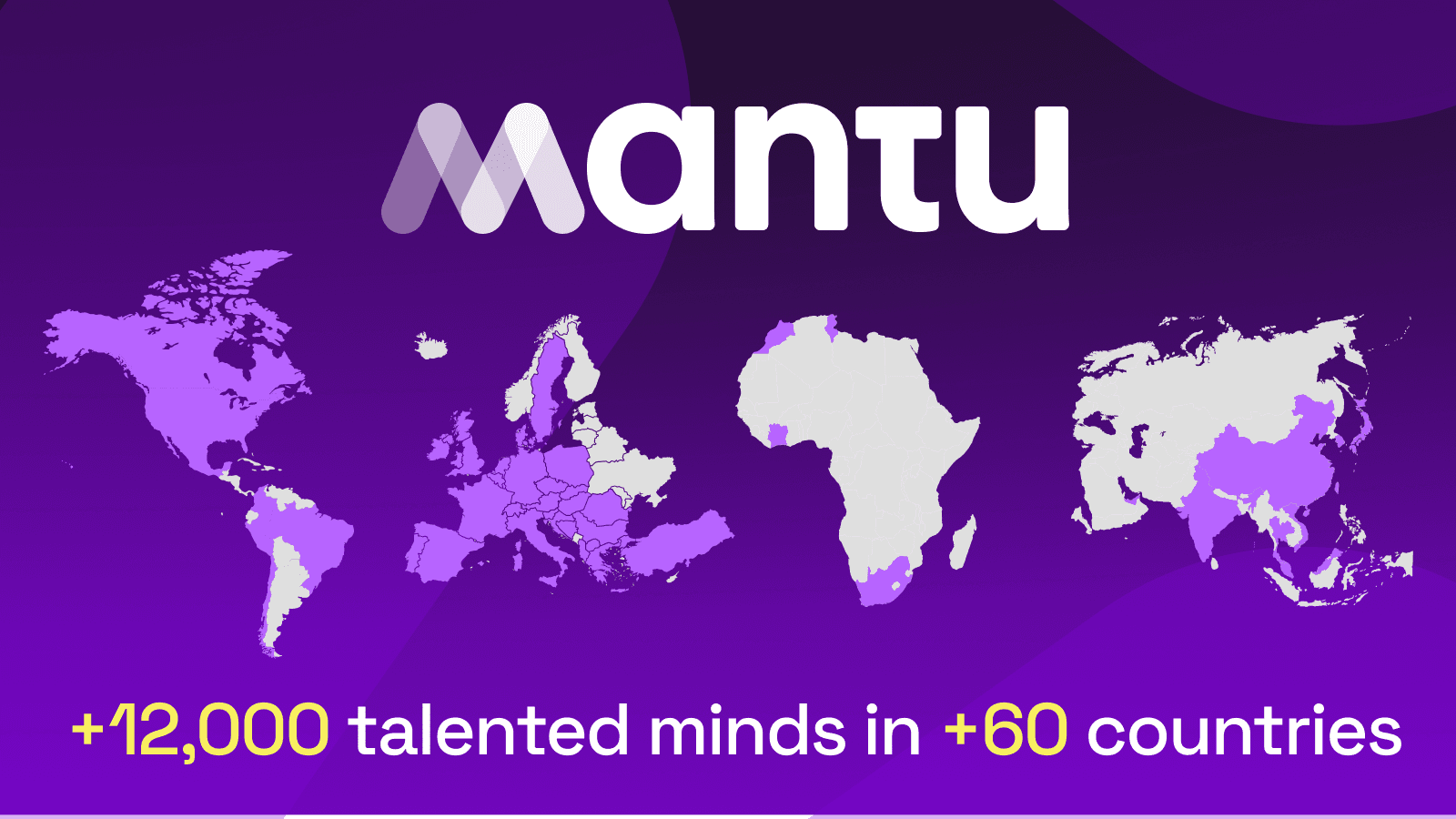
    12,000 people. 110+ nationalities. Numbers like these describe presence, but they say very little about how the work actually connects across it. What "worldwide" means in practice Mantu's people work across more than 60 countries, and close to a third of them work outside their country of birth, according to the group's 2025 Annual Report. That spread runs through a hub-based structure: dedicated centres that deliver internal services and support to the group's brands, staying connected across time zones to keep operations continuous. Each hub stays close enough to its local market to adapt to it, while remaining part of the same coordinated system.Medellín, Tunis, Ho Chi Minh City, Mauritius, Barcelona, and Madrid sit among these hubs, examples within a network that extends well beyond this list. Click on these Hubs to read more about each one of them. Local roots, shared standards What holds the hub model together is better than proximity between offices. It is the combination of local autonomy with shared alignment: each hub adapts to its own market, talent pool, and working culture, while staying anchored to the same standards, reporting lines, and quality expectations as every other hub in the network. That balance is what lets a hub function as a genuine local operation rather than a satellite office waiting for instructions from elsewhere. For instance, in Tunis, hub leadership focuses on close contact between managers and teams, reinforced through regular meetings and internal communication."By fostering trust, we continue to attract new opportunities that strengthen our teams," says Tunis Hub Manager Aziza Mzoughi.At the same time, Barcelona illustrates a different position within the same system. Rather than functioning purely as operational support, the hub takes on genuine decision-making and delivers directly to clients across EMEA, APAC, and LATAM."Barcelona gives people a chance to stay close to delivery while building experience across brands, technologies and markets," says Barcelona Hub Director Sergio Masili.Across the network, the model asks the same thing of every hub, regardless of size, function, or region: build a strong local identity first, then connect it to a standard that holds across the whole group. That is what separates a worldwide network of hubs from a simple list of international addresses. Work that crosses borders by design The clearest evidence of a worldwide operation is not a map of locations. It is what happens the moment a single piece of work requires several of them to act together, on the same timeline, toward the same outcome. That kind of coordination only works when hubs are built to plug into each other by default, not when a specific project happens to demand it. For example, since 2025, one project has brought together teams in Barcelona, Switzerland, Italy, and the Czech Republic to build a cross-country Project Management Centre of Excellence for a consumer goods client, with each location contributing a distinct piece of the delivery.The same logic runs through technology and finance, where the connection between hubs is built into daily operations rather than reserved for occasional projects. IT teams based in Tunis maintain applications used by Mantu people worldwide, working alongside colleagues in Mauritius and Vietnam to keep systems running across time zones. Another example is finance and billing processes handled in Mauritius, serving clients across France and the rest of Europe.In each case, the outcome depends on more than one hub, by design rather than coincidence. The work itself is structured to travel between locations, not to stop at the first border it meets. A scale still growing Mantu's revenue reached €1 billion, up from €810 million two years earlier, and that growth tracked its geographic expansion step by step: from a presence in 5 continents by 2015 to the 60+ countries and 12,000 people the group now operates across. Each stage of growth added reach rather than simply adding headcount in existing locations. The group's current plan, Accelerate 2030, is built to scale that same worldwide network further, across clients, brands, and functions, rather than to consolidate it into fewer places. Where this leaves you A role in finance, technology, recruitment, marketing, or delivery at Mantu rarely stays confined to the market where it is based. The structure connects it, from the first project to clients and colleagues working from other hubs on other continents. Explore open roles across Mantu's global network and see how far your first role could reach.

    Recruitment

    6. Oktober 2026

  • Women at Mantu: the programs behind real career progress

    Only 68.6% of the global gender gap has closed, according to the World Economic Forum's Global Gender Gap Report. That figure sits behind everyday realities: who gets promoted, who gets paid fairly, who ends up in the room where decisions get made. Why the gap is often invisible Gender inequality rarely looks like open discrimination. It usually sits inside systems built without every user in mind. In Invisible Women, author Caroline Criado Perez shows how safety equipment, medical research, and even city planning have historically relied on male-only data. One Swedish city cleared snow from commuter roads first and pedestrian paths later, until it reversed the order and injuries dropped. Workplaces follow the same pattern. Without tracking pay, promotions, and retention by gender, structural gaps stay hidden. Mantu's approach: policies with numbers attached Mantu operates in 60+ countries, with 12,000 people across 11 brands, including Amaris Consulting, LittleBig Connection, and Eleven VMS. Women hold 33.3% of top and middle management positions today. The group's target: 34.3% by 2029, tracked through pay equity audits and promotion monitoring, and tied to leadership remuneration. Mantu signed the United Nations Women's Empowerment Principles in 2021 and launched its DEI Charter in 2025. Progress does not only show up in formal programmes. For Marie Tribouillard, Account Manager, it showed up in how she handled her own clients. "I realized I had levelled up when I stopped reacting to client requests and started proactively shaping the conversation." Her shift, from reacting to leading the conversation, is the kind of everyday ownership the group's targets are designed to make more common. Coding Queendom: a way into tech careers, open to newcomers For a student weighing a first employer, Coding Queendom is the most direct entry point. Launched in Colombia in 2023 by Amaris Consulting, the programme combines a software development scholarship with a six-month consulting placement, supported by mentorship. No prior consulting experience required. Since 2023, Coding Queendom has supported 24 women, 20 of them in Colombia. More than 15 graduates now work on client projects in banking, insurance, retail, healthcare, and consumer goods. The programme expanded to Chile and Brazil in 2025, with Canada next. Diana Alejandra joined the programme at 20, relocating from Bucaramanga to Bogotá straight out of her initial training. "The support I received from the team helped me refine my skills and accelerate my growth," she says. She now works as a Business Analytics Consultant. More information on this program here. Aurora: what career progress looks like further down the line Coding Queendom opens the door. Aurora shows where that path can lead. Launched in 2025 as part of Accelerate 2030, Aurora is a 9-month leadership accelerator for senior and mid-senior women across Mantu's brands, combining advanced leadership training, mentorship from senior leaders inside the group, and a tracked career development plan. The first cohort brought together 12 participants from 8 countries. For Thais, Senior Manager at Amaris Consulting in São Paulo, the programme intersects with a daily reality: she leads a team of men in business development. "Aurora is an opportunity to develop while contributing to a more balanced and inclusive environment," she says. For Thai Ly, Department Manager at Amaris Consulting in Ho Chi Minh City, the programme addresses a topic rarely discussed openly. "I want to learn how senior women balance career ambitions with family responsibilities," she says. Discover now the whole program. Parental leave: the gap that shapes careers early Globally, mothers receive around 24.7 weeks of paid parental leave; fathers receive about 2.2 weeks, according to the International Labour Organization. In 71 countries, fathers get no statutory paid leave at all. This imbalance pushes career slowdowns, part-time work, and missed opportunities toward women specifically. Mantu's Parental Leave Policy applies to every employee, regardless of gender or family structure. The Parental Pathway Program, relaunched in 2025, pairs new parents with experienced colleagues through a buddy system. Where this leaves you, starting out If you are a student or recent graduate, Coding Queendom is the door that opens without prior consulting experience. If you join Mantu directly and build your track record, Aurora and the group's promotion targets shape what comes after. Either way, the entry points are named, not hypothetical. Explore open roles at Mantu and see where a structured path can take you.

    Recruitment

    23. September 2026

  • To what extent does AI change the way we look for talent? Mantu Experience in Paris, 10/09/2026

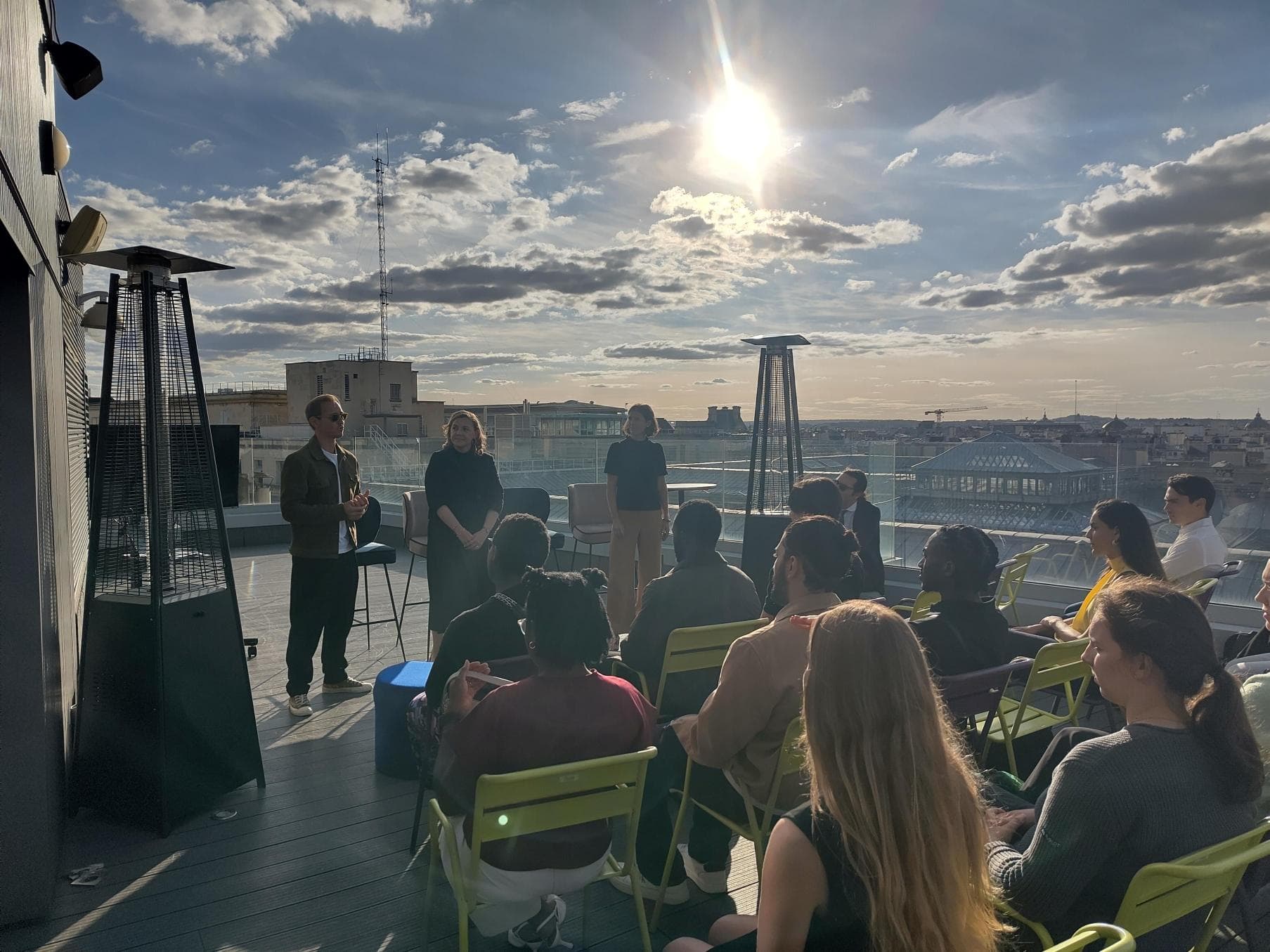
    It's probably the key question to remember from the first Mantu Experience, held in Paris on September 10, because it tackles a topic that concerns everyone: building a career in the age of AI.This is the purpose of such an event. Looking beyond tools and trends, it brought together students, graduates, directors, teachers and entrepreneurs to answer a simple question: what will still make the difference tomorrow? AI changes the value of work Mantu's co-CEO Constance Nevoret opened with this statement. Everyone talks about versions, prompts and productivity. But the real change lies elsewhere: some skills are becoming less important, while others are becoming crucial. Teams can already feel this shift."The main AI scar is not between companies, but between teams."This leads to a paradox for the next generation: tasks that used to train juniors, such as searching, preparing, synthesizing and producing a first draft, can now be completed quickly by AI. Production is faster, but learning is not.The real challenge, then, is to use AI to learn faster, not to stop learning altogether. That is co-intelligence: working with AI, using it to sharpen ideas, explore and learn, while holding onto what cannot be outsourced: judgement. AI can also make juniors more valuable Audrey Garrouste, Global Talent Management Director at Technip Energies, made this point: AI allows juniors to spend less time on repetitive tasks and more on valuable ones. However, one condition remains essential to progress: experience, curiosity and a constant desire to learn.What if some skills are about to matter more than ever in recruitment?Jules Trecco, CEO of Agence Mantu, raised this question, because some aspects of a profile remain hard to assess through a CV or a standardized process, such as: the ability to understand a work environment and translate it into operational pragmatism intellectual curiosity, expressed through community, sporting or artistic involvement the ability to act as an intrapreneur or entrepreneur, by making decisions, testing, failing, learning and trying again Sometimes, experience says more than a few lines on a CV. It reveals what is often hard to assess: the ability to commit fully, to show resilience and to turn experience into action. Is there a risk of becoming better yet meaningless system operators? This is when Sylvain Bureau, teacher and Scientific Director of ESCP's Improbable Chair, brought another perspective. For a long time, organisations of all kinds have promoted people who can optimise, rationalise and standardise. But if AI becomes better than humans at doing this, trying to resemble it becomes pointless."Today's main risk is not that computers become human, but that humans become underperforming computers."In this new context, intuition, imagination, relational skills, experimentation and flexibility have become more valuable. True leadership is shifting from having the right answers to asking the right questions. What will tomorrow's talent look like? At Mantu, we call them Hybrid Builders: people able to understand a problem, build with the help of technology and AI, and connect solutions to human and business challenges.Beyond being the best talents in their respective fields, Hybrid Builders are people who can connect different environments, experiment, learn and build. Above all, they are people who keep their curiosity and judgement for themselves, rather than outsourcing them to AI."Don't let AI decide what you want to become," as Constance Nevoret said.For students and new graduates, the key question has shifted from "What job will I do?" to "What problems do I want to solve, with whom, and how can AI help me?" That is exactly what future editions of Mantu Experience aim to keep exploring, by creating discussions between the new generation of talent and those already building tomorrow's organisations.Thanks again to Constance Nevoret, Audrey Garrouste, Jules Trecco and Sylvain Bureau for their complementary visions. Thanks also to the students and new graduates who contributed to the quality of the discussions.This was only the first edition. Until the next one, feel free to explore all of our opportunities here.
    Recruitment

    17. September 2026

  • What does an Account Manager do?

    How many roles let you build your own client strategy, coordinate a project across three continents, and organise a client event, all within the same year? At LittleBig Connection, that range sits inside one job title: Account Manager. More than a sales role An Account Manager grows a portfolio of client accounts. That part is true. But the role also covers strategy, relationship-building, and global coordination. It evolves with every client and every project.Florian joined LittleBig Connection six years ago as an Account Manager in Lyon. Today he leads a team of five across the Auvergne-Rhône-Alpes region. His view on the job: it starts with ownership. "It is about handing the keys over to your team members so they can develop their business unit commercially." You build your own strategy, from day one New Account Managers write their own script. At LittleBig Connection, onboarding runs for three weeks: sales cycle training, internal tools, meetings with every support team, and organisation methods to manage a full pipeline of opportunities.What follows onboarding is trust, immediately. Marion, Senior Account Manager, hands new hires an existing client portfolio on day one. "I start from the principle that I trust them from day one. They often inherit an existing client portfolio, and from the very first day, they are already accountable for a business to develop."Discover now the importance of trust within the role of Account Manager. The job is also community management Growing an account is not only about signing missions. It means building relationships that last. Sarah-Li, who works alongside Florian in Lyon, organized a breakfast event at a client's office, bringing consultants and managers into the same room. A small gesture, that makes a stronger relationship. "That is also what our job is about: animating this community." No two days look the same LittleBig Connection's clients span industrial design, engineering, IT, and marketing. The profiles requested are just as varied. Sarah-Li puts it simply: "We never get bored. There are so many different topics, so many different people to work with." For an Account Manager, this means constant learning and fast exposure to sectors most graduates never see this early in a career.Read Florian and Sarah-Li's experiences now. Working at a global scale Many client projects run across continents. Florian recalls a deployment for a Lyon-based client that stretched to Canada, South America, and India, each stage bringing new contacts, cultures, and time zones. "Every time, it requires adapting culturally. And behind all of it, the goal is for the client to be satisfied and to feel properly supported." How the model actually works LittleBig Connection connects large organisations with a global community of freelancers and consulting firms. When a client need comes in, the Account Manager opens it on the platform, where the community proposes candidates. Internal tools, including an AI scoring system, filter the applications, but the Account Manager owns the final call: selecting the right profile and making sure the fit is real. Indeed, building the freelancer community that makes this possible is part of the main job too What the role asks of you Rigour, business sense, and the ability to manage several live opportunities at once. Axel, who works with Grégoire on energy accounts, describes an environment built on autonomy: "We work in a truly stimulating environment. We collaborate a lot as a team, we exchange with many different people, and every day we learn something new."Relate now to Axel and Gregoire's respective profiles. Is this role for you? If you want a job that mixes sales, strategy, and human connection, with responsibility handed to you early, Account Manager is worth exploring. Career paths move fast here: within a few years, Account Managers move into team management or lead entire regional business units.Curious what it looks like day to day? Explore current Account Manager openings at LittleBig Connection.

    Recruitment

    9. September 2026

  • The One Start Program, a simultaneous beginning for everyone

    Starting a new job can feel overwhelming. That’s why Mantu created One Start, a structured onboarding programme designed to help every newcomer build confidence, learn quickly, and connect with their team. During your first three months, you’ll combine online learning, in-person events, and real projects from day one. You’ll discover Mantu’s culture, tools, and ways of working while building relationships with colleagues across teams and countries. “One Start made it much easier to understand my role and get started quickly.” Malo  The programme is shared by newcomers across Mantu, creating a common starting point and an international network from the beginning. With teams in more than 60 countries, One Start reflects the way Mantu works: collaborative, global, and focused on learning through experience. Follow Mantu on JobTeaser to discover more career insights and people stories.

    Arbeitsleben

    4. August 2026

  • “At Mantu, we don’t wait years before giving people responsibilities.” Constance Névoret, Co-CEO of Mantu

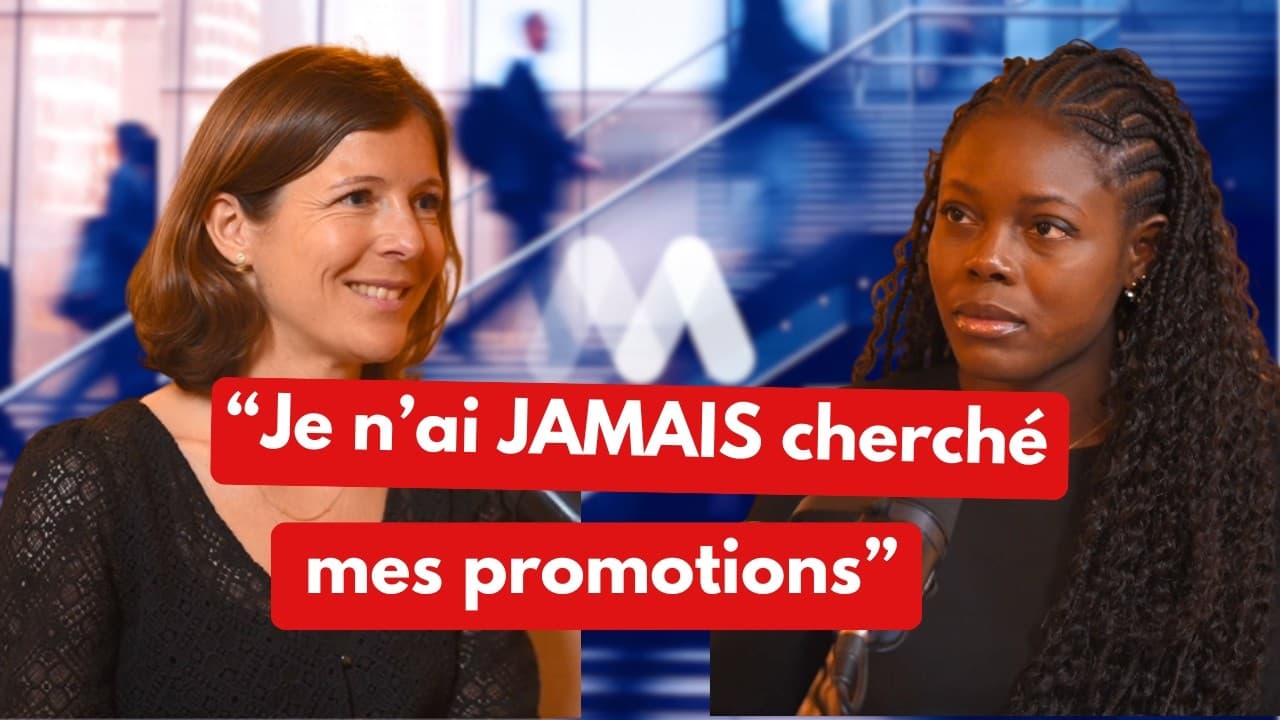
    In the last  podcast with La Jobsetteuse on Top1%, Constance Névoret, Co-Ceo at Mantu, explains that she joined Mantu because she had the opportunity to build a business, lead teams, and make real decisions early in her career. At Mantu, career growth is driven by ownership, initiative, and learning, not just seniority. Responsibility comes with support, mentoring, and the chance to develop through real business challenges. Constance’s journey shows how trust, accountability, and continuous learning can accelerate professional growth. Watch the full podcast to discover how careers grow at Mantu.

    Arbeitsleben

    4. August 2026

  • From architecture to aerospace: how a BIM consultant built a new career?

    Maria started her career in architecture before joining Amaris Consulting as a BIM consultant in the aerospace industry. Her story shows how technical skills can transfer across industries. “As a result, I was able to transfer and leverage the skills and knowledge I had acquired, applying them successfully in a new professional context.” Maria Sangermano, BIM Consultant Today, she works on digital 3D modeling, data management, technical drawings, and collaboration tools that help aerospace teams improve quality, planning, and coordination. For young engineers, the key lesson is that early career experiences can become powerful foundations for new opportunities. The ability to learn, adapt, and apply your expertise in different environments can open unexpected career paths. Read Maria’s full story and discover our opportunities in aerospace.

    Recruitment

    4. August 2026