
Mantu
Audacious ideas, Delivered beyond
To what extent does AI change the way we look for talent? Mantu Experience in Paris, 10/09/2026
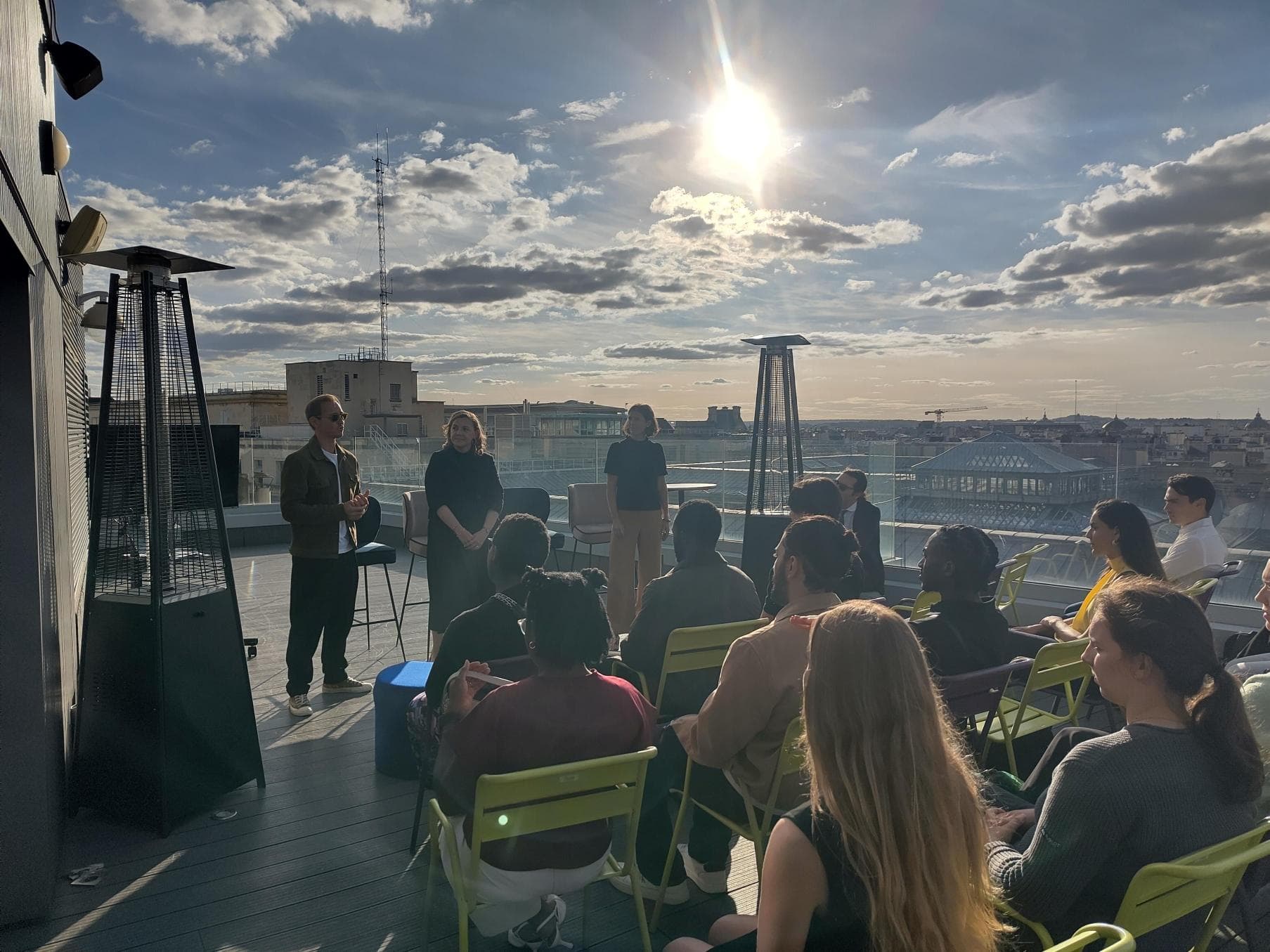
It's probably the key question to remember from the first Mantu Experience, held in Paris on September 10, because it tackles a topic that concerns everyone: building a career in the age of AI.This is the purpose of such an event. Looking beyond tools and trends, it brought together students, graduates, directors, teachers and entrepreneurs to answer a simple question: what will still make the difference tomorrow?
AI changes the value of work
Mantu's co-CEO Constance Nevoret opened with this statement. Everyone talks about versions, prompts and productivity. But the real change lies elsewhere: some skills are becoming less important, while others are becoming crucial. Teams can already feel this shift."The main AI scar is not between companies, but between teams."This leads to a paradox for the next generation: tasks that used to train juniors, such as searching, preparing, synthesizing and producing a first draft, can now be completed quickly by AI. Production is faster, but learning is not.The real challenge, then, is to use AI to learn faster, not to stop learning altogether. That is co-intelligence: working with AI, using it to sharpen ideas, explore and learn, while holding onto what cannot be outsourced: judgement.
AI can also make juniors more valuable
Audrey Garrouste, Global Talent Management Director at Technip Energies, made this point: AI allows juniors to spend less time on repetitive tasks and more on valuable ones. However, one condition remains essential to progress: experience, curiosity and a constant desire to learn.What if some skills are about to matter more than ever in recruitment?Jules Trecco, CEO of Agence Mantu, raised this question, because some aspects of a profile remain hard to assess through a CV or a standardized process, such as:
- the ability to understand a work environment and translate it into operational pragmatism
- intellectual curiosity, expressed through community, sporting or artistic involvement
- the ability to act as an intrapreneur or entrepreneur, by making decisions, testing, failing, learning and trying again
Sometimes, experience says more than a few lines on a CV. It reveals what is often hard to assess: the ability to commit fully, to show resilience and to turn experience into action.
Is there a risk of becoming better yet meaningless system operators?
This is when Sylvain Bureau, teacher and Scientific Director of ESCP's Improbable Chair, brought another perspective. For a long time, organisations of all kinds have promoted people who can optimise, rationalise and standardise. But if AI becomes better than humans at doing this, trying to resemble it becomes pointless."Today's main risk is not that computers become human, but that humans become underperforming computers."In this new context, intuition, imagination, relational skills, experimentation and flexibility have become more valuable. True leadership is shifting from having the right answers to asking the right questions.
What will tomorrow's talent look like?
At Mantu, we call them Hybrid Builders: people able to understand a problem, build with the help of technology and AI, and connect solutions to human and business challenges.Beyond being the best talents in their respective fields, Hybrid Builders are people who can connect different environments, experiment, learn and build. Above all, they are people who keep their curiosity and judgement for themselves, rather than outsourcing them to AI."Don't let AI decide what you want to become," as Constance Nevoret said.For students and new graduates, the key question has shifted from "What job will I do?" to "What problems do I want to solve, with whom, and how can AI help me?" That is exactly what future editions of Mantu Experience aim to keep exploring, by creating discussions between the new generation of talent and those already building tomorrow's organisations.Thanks again to Constance Nevoret, Audrey Garrouste, Jules Trecco and Sylvain Bureau for their complementary visions. Thanks also to the students and new graduates who contributed to the quality of the discussions.This was only the first edition. Until the next one, feel free to explore all of our opportunities here.